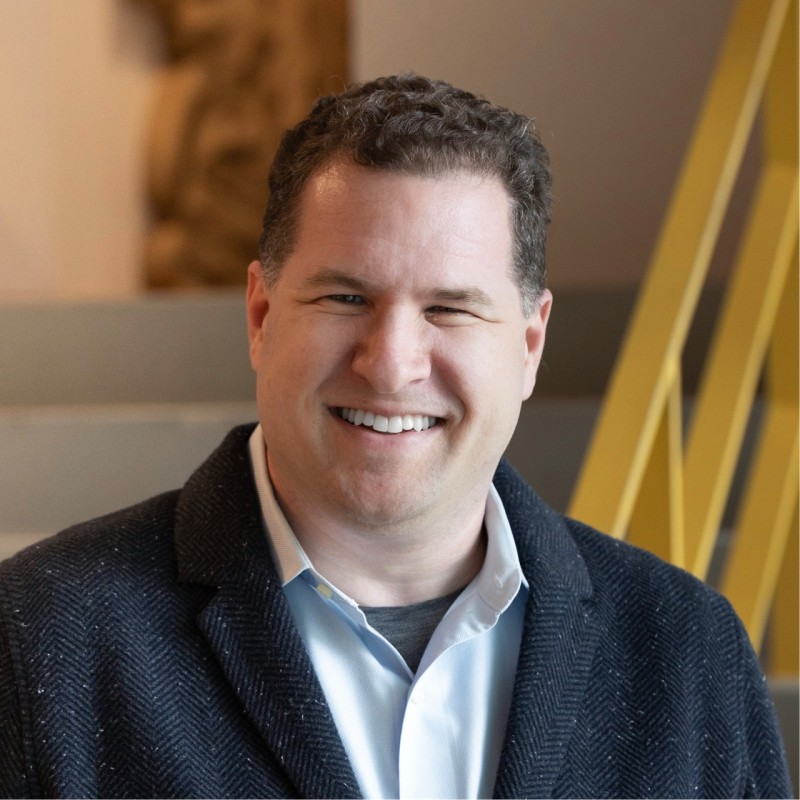
Rob Sherman
VP Policy @ Meta | Board @ Partnership on AI | AI & Tech Policy Leader
View LinkedIn ProfileExecutive Overview
I've spent most of my career working on rules that shape how technology reaches people. I studied human-computer interaction before law school, so I usually start with the product: what it actually does, who benefits and why, and who has the power to change it when something goes wrong.At Meta, I lead a team that builds policy across our products, including AI, monetization, messaging and encryption, privacy, and wearable devices. Much of that work is deciding how to deploy technology the world hasn't seen before to help the most people while mitigating downsides. That has included building the policy architecture for Meta's open-source Llama models, expanding access with safeguards for responsible deployment; helping bring end-to-end encryption to people through WhatsApp and Messenger; and helping conceive Why Am I Seeing This, one of the first algorithmic transparency tools deployed at global scale.The work has made me optimistic about AI and skeptical that its benefits arrive on their own. People need the knowledge and practical ability to shape it around their priorities. Companies need to stay accountable when it misses the mark. Governments should regulate the actual hazard and the actor who can control it, not just new technology because it's new or has a visible feature. Working inside a company at the center of these debates has taught me to focus on whether a principle changes what gets built, not simply whether it sounds right.It's also made me conclude that current policy approaches won't be enough. We need to know which established rules still hold, which decisions are genuinely novel, and where companies, governments and civil society need new ways of working together. We also need to recognize that people with the biggest stake in new technology aren't always in the room when these questions get decided.So the question I keep coming back to is: who gets to author the future of the technology we're building today? For me, authorship is concrete: who sets the goal, who gets to build, who can challenge an outcome, and who bears responsibility when it fails.I've discussed these questions with governments and experts on six continents, including testimony before the U.S. Congress, UK House of Lords and Joint Committee on Human Rights, and Canadian Parliament. I serve on the Partnership on AI's board and the FPF Center for AI's Leadership Council, and I'm an IAPP Westin Emeritus Fellow.That's the work I want to keep doing: building products and rules that give people the power to author what technology means for their own lives.
Career Timeline
- Partnership on AICurrent2026–Present· 8 mos
- Member, Board of DirectorsCurrent2026–Present
- MetaCurrentApr 2012–Present· 14 yrs 5 mos
- Vice President, Policy and Deputy Chief Privacy OfficerCurrentMar 2019–Present
- Deputy Chief Privacy OfficerFeb 2014–Mar 2019
- Manager, Privacy and Public PolicyApr 2012–Feb 2014
- Apr 2005–Mar 2012· 6 yrs 11 mos
- Technology and Media AttorneyApr 2005–Mar 2012



Education

J.D.
University of Michigan Law School
B.S.
Human-Computer Interaction
University of Maryland